 06 Jul 2026 · 2 views
Options are one of the most flexible instruments in the derivatives market, but that flexibility comes with a learning curve. This article covers the basics: what calls and puts are, and why time decay is the single most important concept for anyone buying options.
Calls and Puts, Simply Explained
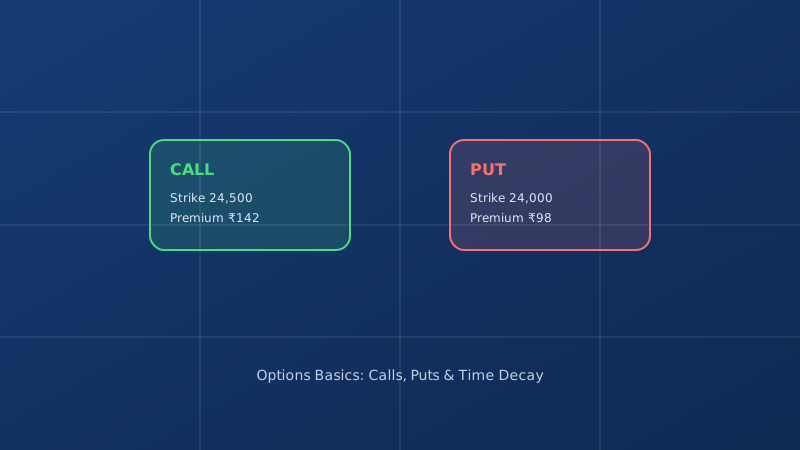
A call option gives the buyer the right — but not the obligation — to buy an underlying asset at a fixed strike price before expiry. Buyers of calls profit when the underlying rises above the strike (plus the premium paid).
A put option gives the buyer the right to sell the underlying asset at a fixed strike price before expiry. Put buyers profit when the underlying falls below the strike (minus the premium paid).
In both cases, the option seller (writer) takes on the opposite risk in exchange for collecting the premium upfront.
Why Time Decay (Theta) Works Against Buyers
Every option has a limited lifespan, and its value erodes as it approaches expiry — a phenomenon known as time decay or theta. All else being equal, an option loses a little extrinsic value every day, and this erosion accelerates sharply in the final week before expiry.
This is why option buying is not just about getting the direction right — timing matters just as much. A trader can be directionally correct and still lose money if the move takes too long to play out and theta erodes the premium faster than the underlying moves.
Why Many Traders Prefer Spreads
Because time decay works against buyers, many experienced traders combine buying and selling legs into spreads (for example, a bull call spread or a bear put spread). Spreads reduce the impact of theta compared to a simple long option position, at the cost of capping the maximum profit potential.
Getting Started
If you are new to options, start by understanding the Greeks (delta, theta, vega) conceptually before committing capital, and always define your maximum acceptable loss before entering any trade — options can move quickly in both directions.