 06 Jul 2026 · 5 views
Open interest represents the total number of outstanding derivative contracts — futures or options — that have not yet been settled or closed out. Unlike trading volume, which resets every day, open interest is a running count that reflects how much money is still committed to the market at any given time.
Why Open Interest Matters
Traders often combine changes in open interest with price direction to gauge whether a trend is being driven by fresh positions or unwound by existing ones. There are four broad combinations worth remembering:
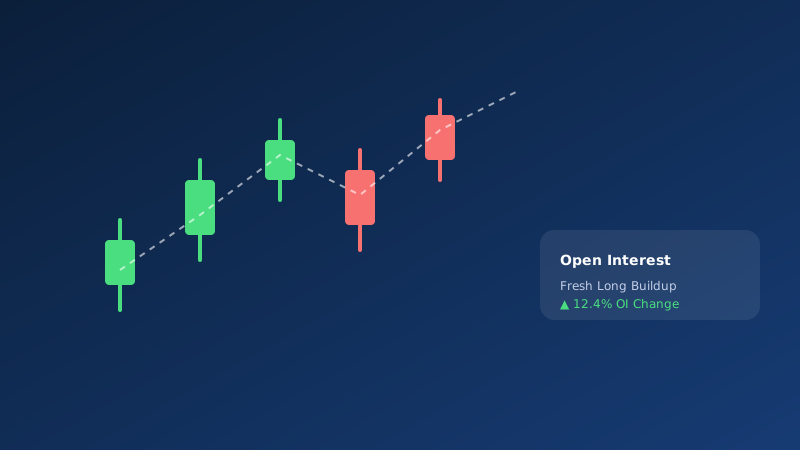
- Price up, OI up: Typically indicates fresh long buildup — new buyers are entering with conviction.
- Price up, OI down: Usually short covering — traders who were short are exiting, pushing price up without new commitment.
- Price down, OI up: Often fresh short buildup — new sellers are entering the market.
- Price down, OI down: Generally long unwinding — existing buyers are exiting their positions.
Reading Open Interest Alongside Price Action
On its own, open interest is just a number. Its real value comes from combining it with price action, support/resistance zones, and volume. For example, a breakout above a key resistance level accompanied by a sharp rise in open interest tends to carry more conviction than the same breakout on flat or falling OI.
Options traders also watch open interest build-up at specific strike prices to identify potential support and resistance zones for the underlying — strikes with unusually high call OI can act as resistance, while strikes with high put OI can act as support, since option writers often defend these levels.
A Word of Caution
Open interest is a useful piece of context, not a standalone signal. It should be used alongside your existing technical framework — trend, momentum, and risk management — rather than as the sole basis for a trade. As with any single indicator, relying on it in isolation can lead to misreadings, especially around expiry when positions roll over.